From our Asia curation
Ba Miền.
Vietnam in Three Flavours
From Our Vietnam curation
Ba Miền: Vietnam in Three Flavours.
Custom-crafted itineraries.
Designed around you, never around a template.
8N/9D
Vietnam
About this journey
Ba Miền begins with a distinctly Vietnamese idea: Bắc, Trung and Nam, the North, Central and South Vietnam, each carrying its own accent, table and memory. Hanoi brings the restraint of northern flavours and streets heavy with history; Central Vietnam turns warmer and brighter through trading ports, coastal life and lantern-lit evenings; the South loosens the rhythm again, with bolder food, Sài Gòn energy and the waterways of the Mekong shaping everyday life.
Hanoi begins with Phố Cổ streets, temple lakes and the landscapes of Ninh Binh and Ha Long before the journey moves to Da Nang, where the Hàn River, Bà Nà Hills and nearby Hoi An bring a different palette of lantern light, coastal air and central Vietnamese heritage. Ho Chi Minh City closes the route with Sài Gòn energy, riverside evenings and a final journey into the Mekong Delta, where southern Vietnam is experienced at water level from a sampan.
Ba Miền: Vietnam in Three Flavours is Duniya Safari’s journey through a country best understood in layers rather than as one continuous story. North, Central and South each leave a different taste behind, and together they make Vietnam feel far larger than the distance travelled.
What's included
Accommodation
Breakfast
Sightseeing
Intercity Tickets
Transfers
Visa Assistance
Highlights of your trip
The experiences that make this journey special
Itinerary
A carefully crafted journey, one unforgettable day at a time.
9 days3 cities
Arrive in Hanoi and transfer to your hotel. In the evening, start at Hoan Kiem Lake and Ngoc Son Temple, then head into the narrow streets of the Old Quarter. Scooters slip past old façades, cafés spill onto pavements, and the lake offers occasional pockets of calm amid the movement.
Stay out a little longer if you feel like it. A bowl of phở, bún chả or an egg coffee can easily become part of the first evening, while Phố Cổ is best discovered without much agenda, one lane, one shopfront and one aroma at a time.
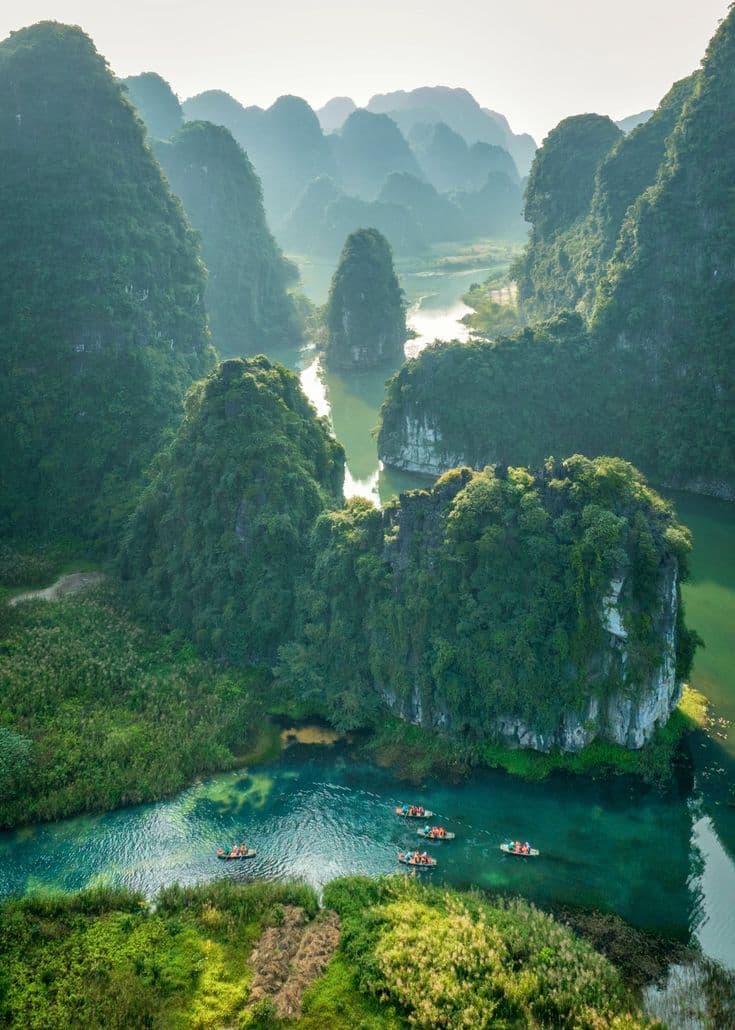
Beyond Hanoi, Ninh Binh unfolds into a landscape of limestone peaks, rice paddies, and dynastic history. At Hoa Lu, the story reaches back to Vietnam’s early capital, then shifts to Trang An, where small boats slip beneath cliffs and through caves along quiet waterways.
The view changes again at Mua Cave, where the climb rises above the river channels and fields below. From the top, the karsts seem to stretch far beyond the immediate valley, giving northern Vietnam one of those panoramas photographs never quite capture.
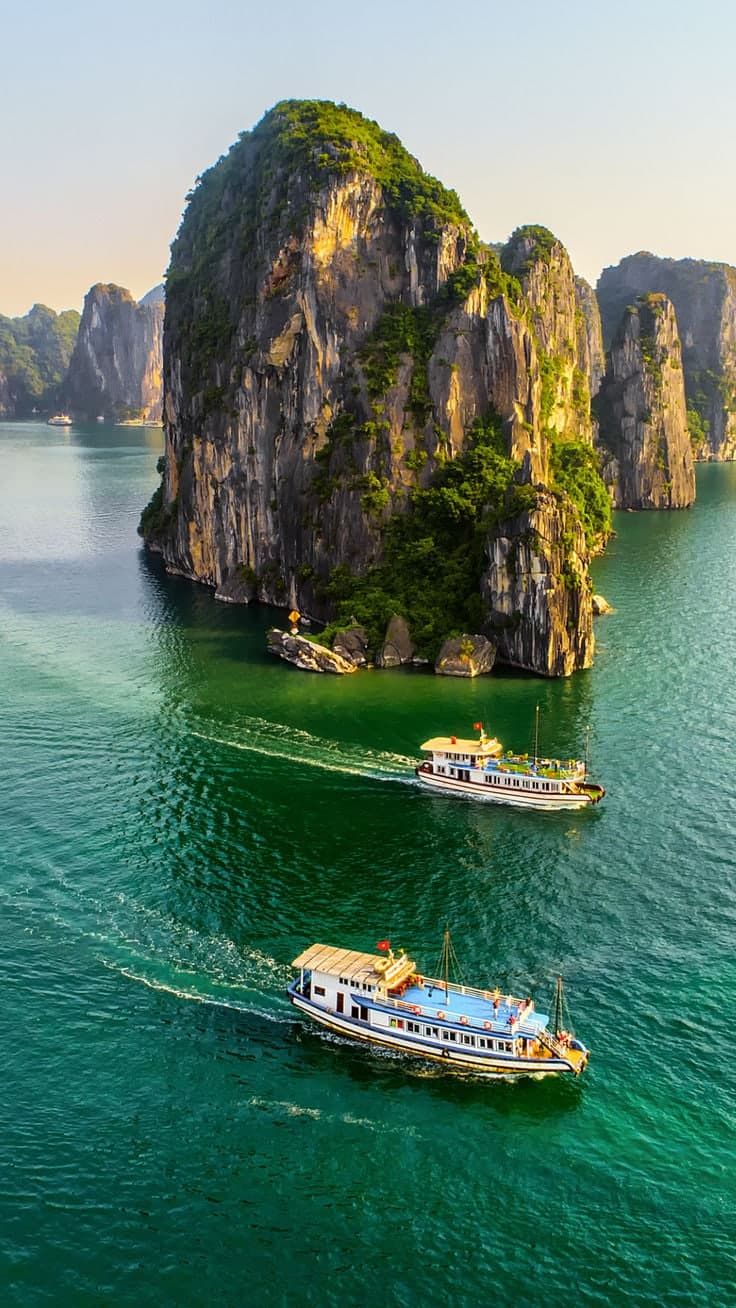
Ha Long Bay turns northern Vietnam’s limestone landscape towards the sea. From the water, cliffs and islets appear one after another, sometimes clustered tightly together, sometimes opening into broad stretches of bay with nothing between the boat and the horizon.
Much of the pleasure is simply watching the landscape rearrange itself as the cruise moves through it. Stay on deck when you can, linger over the views, and let the bay set its own pace before returning to Hanoi for the evening.
Check out of your Hanoi hotel and fly south to Da Nang. Central Vietnam arrives with wider roads, coastal air and the Hàn River running through the city, while a line of distinctive bridges gives the waterfront much of its evening character.
As night falls, see Da Nang from the river aboard the Poseidon Cruise, with dinner as part of the evening rather than an interruption. The city lights gather along both banks before the Dragon Bridge takes over with its familiar burst of fire and colour.
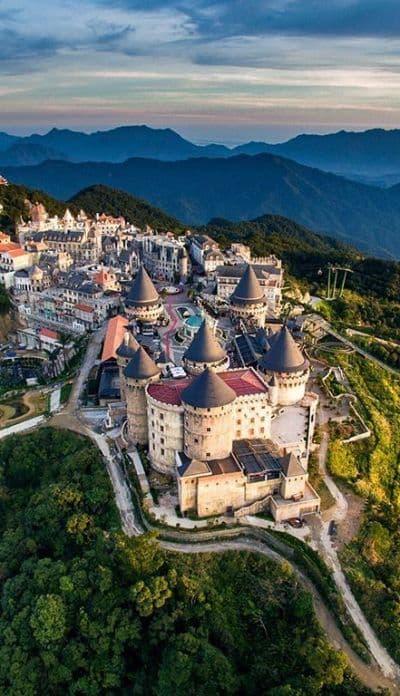
The hills west of Da Nang bring a sudden change in altitude and atmosphere. The cable car climbs towards Bà Nà Hills as the coast drops away below, eventually reaching cooler air, drifting clouds, and the Golden Bridge suspended high above the surrounding slopes.
Up here, the landscape feels far removed from the riverfront left behind that morning. Spend time among the viewpoints and hilltop attractions before descending towards Da Nang, watching the coast gradually return beneath the cable car.
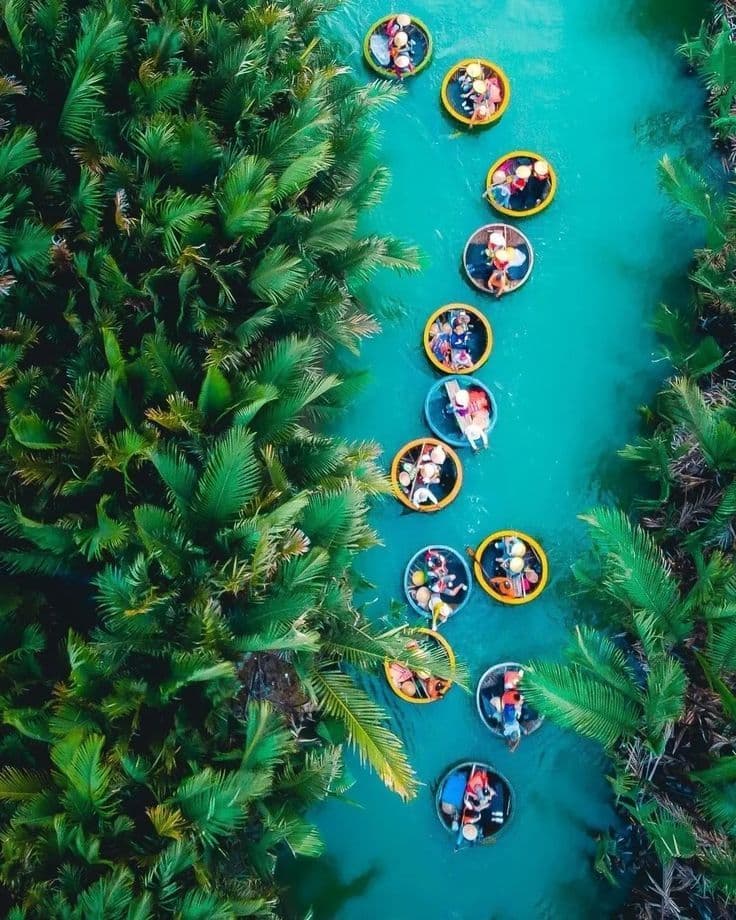
The road towards Hoi An first slips into the coconut waterways of Bay Mau, where round coconut basket boats weave between palms and narrow channels. It is playful, colourful and unmistakably local, with the landscape closing in around the water before the journey reaches one of Vietnam’s most atmospheric old towns.
By late afternoon, Hoi An’s ochre façades and merchant houses begin catching the softer light. Stay into the evening as lanterns appear along the streets and riverfront and the Night Market gathers around them. Cao lầu or mì Quảng fits naturally into a night where Central Vietnam is experienced as much through its table as through its architecture.
Check out and fly south to Ho Chi Minh City, where the final regional change is difficult to miss. The streets feel faster, the buildings rise higher, and the traffic seems to move to its own choreography, giving Sài Gòn an energy unlike Hanoi or Da Nang.
By evening, Nguyen Hue Walking Street, the Saigon River waterfront and the lanes around Ben Thanh bring you into the city at street level. Stop for a Vietnamese coffee, follow wherever the food and lights look interesting, and let the South introduce itself without a formal tour.
South of Sài Gòn, the Mekong begins breaking the landscape into rivers, canals and fertile banks. Vinh Trang Pagoda adds a quieter cultural pause before the waterways become the focus, with palms, orchards and settlements appearing increasingly close to the river.
A hand-rowed sampan takes the journey into narrower channels where the banks seem almost within reach. Here, the Mekong is not scenery around an attraction; it shapes how the region moves and lives. By evening, Sài Gòn feels very far from these shaded waterways, despite being only a road journey away.
Check out of your hotel and transfer to Ho Chi Minh City Airport for your onward flight. Hanoi’s old lanes, the karsts of Ninh Binh and Ha Long, Da Nang’s river lights, Hoi An’s lanterns and the waterways of the Mekong now sit within the same journey.
Ba Miền: Vietnam in Three Flavours comes to an end here with Duniya Safari. North, Central, and South each leave behind their own food, landscapes, and rhythm, not as three separate Vietnams, but as three ways of understanding the same country.
Hotels
Our recommended hotels. Upgrade, swap, or customize any stay

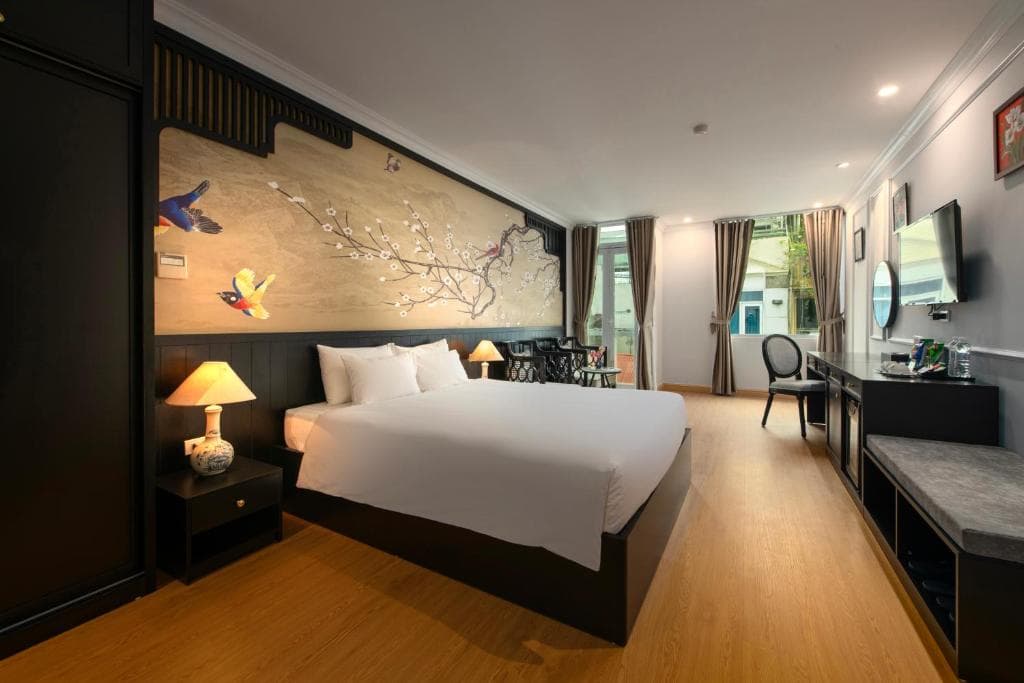
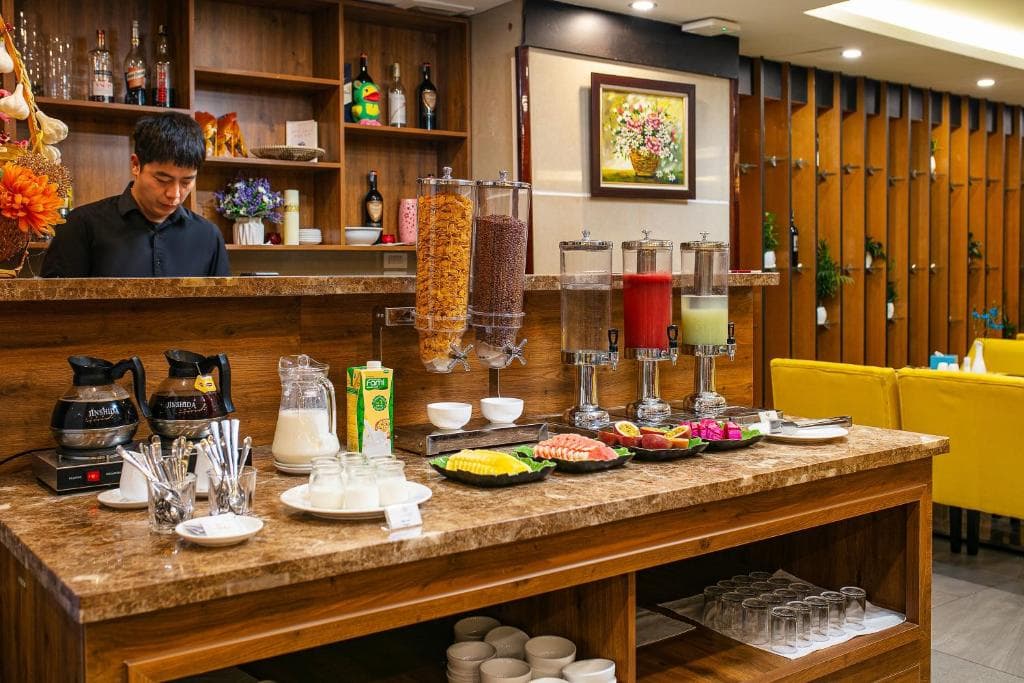
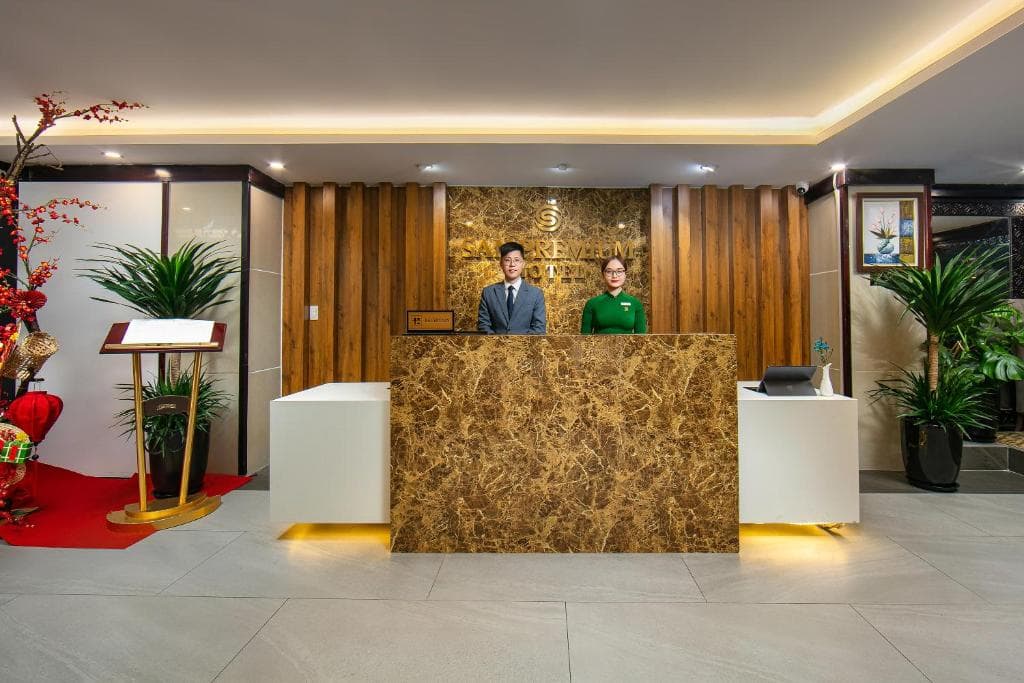
Hanoi3 nights
San Premium Hotel
4-star hotel
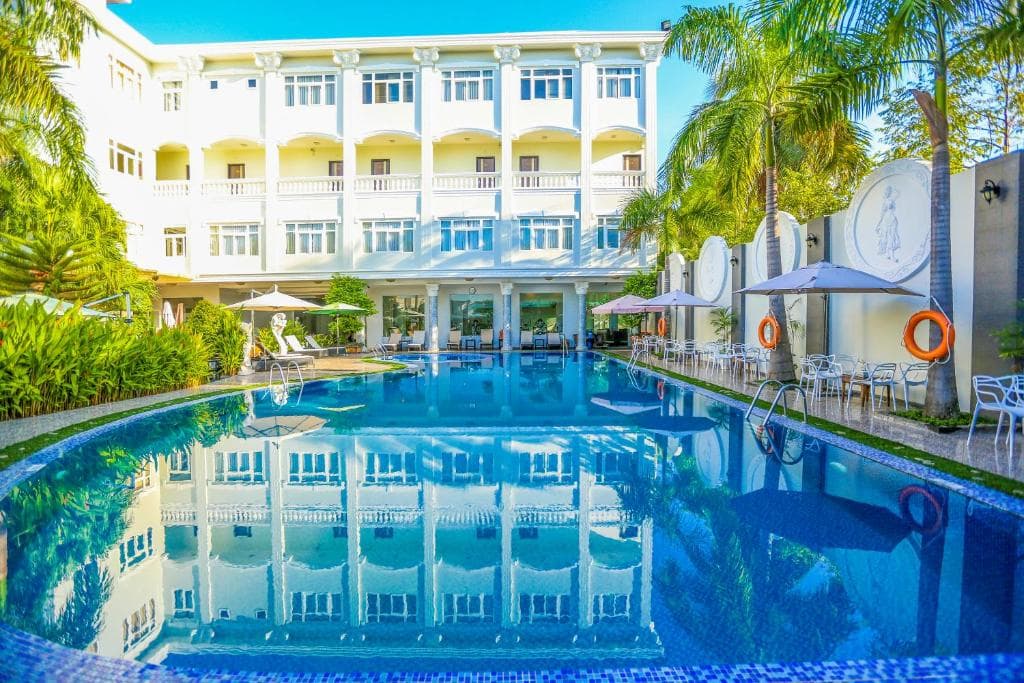
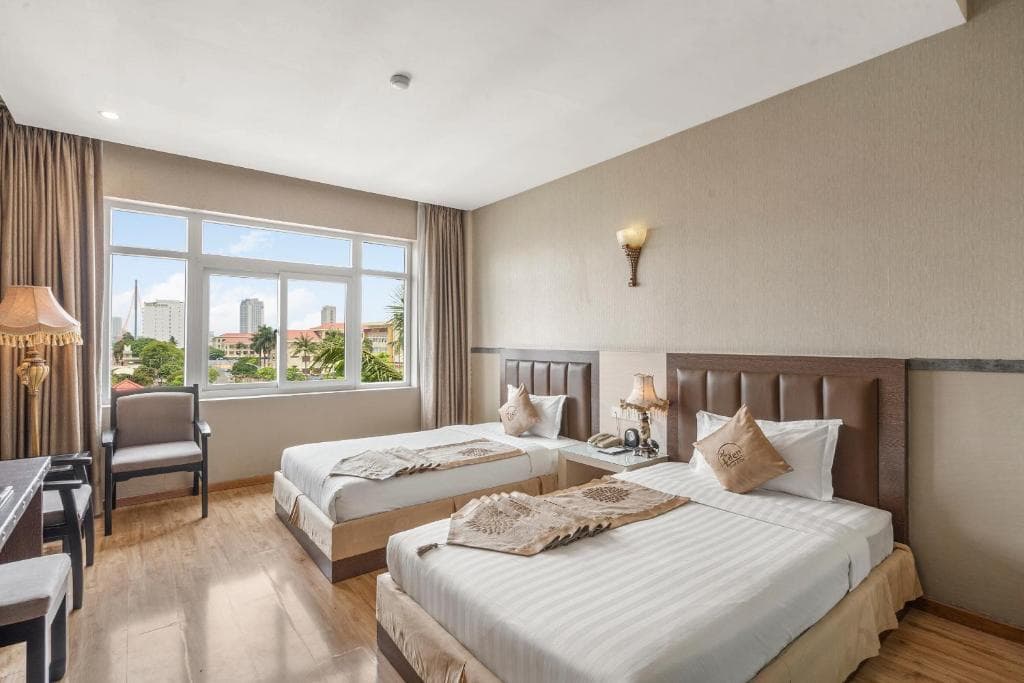
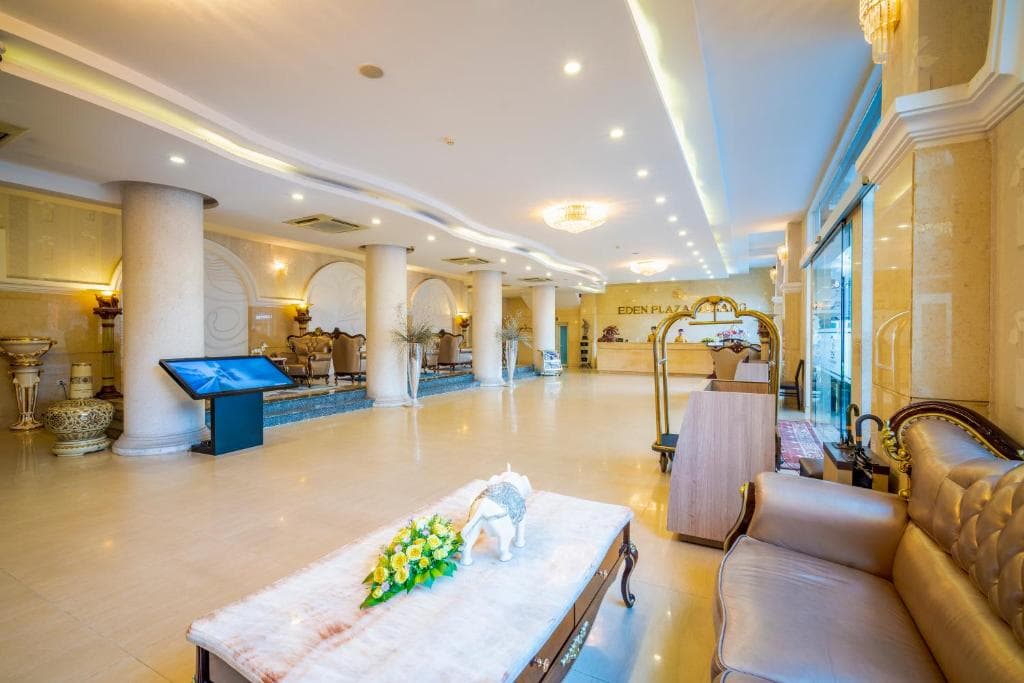
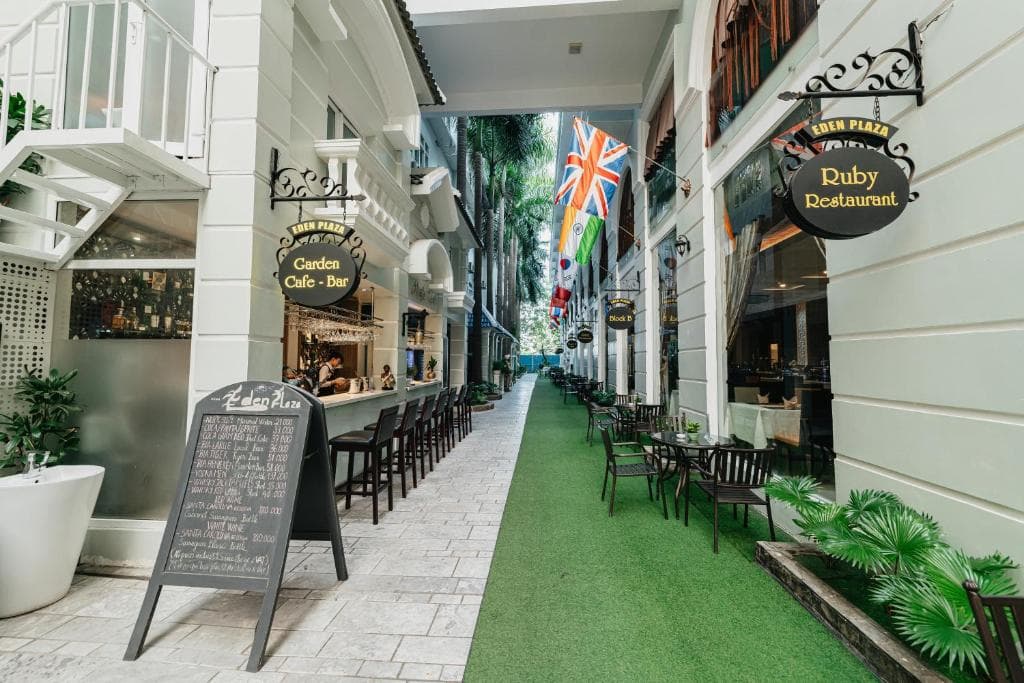
Da Nang3 nights
Eden Plaza Danang
4-star hotel


Ho Chi Minh2 nights
Liberty Central Saigon Centre
4-star hotel
How It Works
From first spark to a trip you'll never forget — four simple steps.
01
Wanderlust Selection
Embark on your journey by discovering exciting tour packages on our website. Pick the package that sparks your wanderlust and fill the 'Enquire Now' form.
02
Personalized Planning
Get paired with a dedicated destination expert for personalized trip planning. Stay connected through WhatsApp to discuss your plans, preferences and travel dates.
03
Tailor-Made Experience
Our destination expert will curate packages exclusively tailored to your desires. Customize every aspect, from travel dates to activities, to create your perfect getaway.
04
Confirm and Unwind
Secure your booking by paying a token amount and let us handle the rest. Enjoy a seamless and memorable trip with continuous after-sales support.
Optional · not included
Extend Your Journey
These are a few of our favourite additions if you’d like to make this itinerary longer
Sa Pa
Set along the Mediterranean, Nice combines beautiful beaches, a colourful old town, elegant architecture and relaxed Riviera charm with a vibrant food and cultural scene

Hoi An
Set along the Mediterranean, Nice combines beautiful beaches, a colourful old town, elegant architecture and relaxed Riviera charm with a vibrant food and cultural scene

Phu Quoc
Set along the Mediterranean, Nice combines beautiful beaches, a colourful old town, elegant architecture and relaxed Riviera charm with a vibrant food and cultural scene
How We’d Plan It
Where the Mountains Turn to Terraces
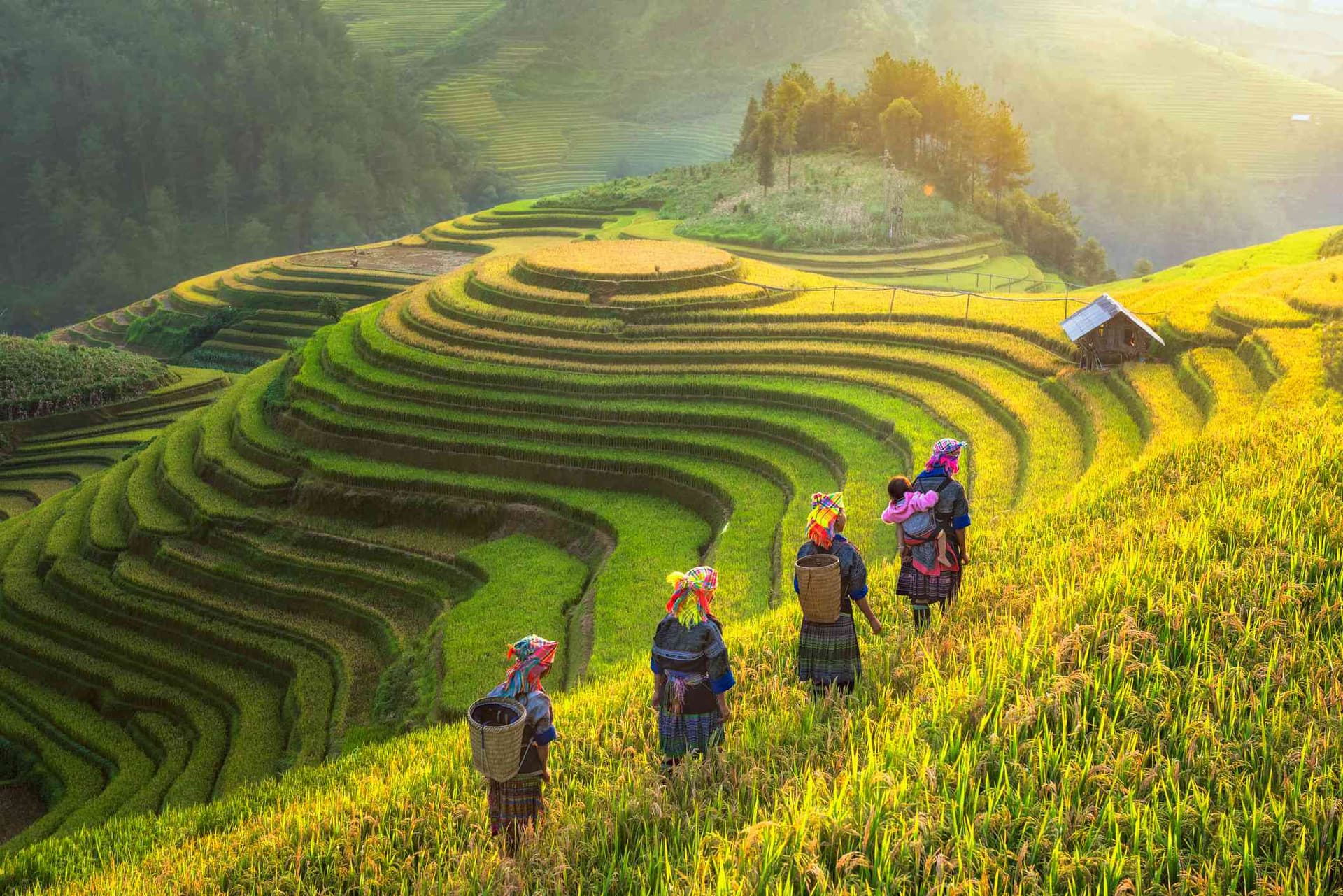
If you want to experience the mountain landscapes and ethnic cultures of northern Vietnam beyond Hanoi, Sa Pa takes you high into the Hoàng Liên Sơn range. Walk through terraced valleys around villages such as Lao Chải and Tả Van, meet communities whose traditions remain closely tied to the mountains, browse Sa Pa town and, when conditions are favourable, rise above the clouds towards Fansipan for extraordinary views across the north.
Duniya Safari recommends adding 2 nights in Sa Pa after Hanoi. Two nights allow enough time for the mountain journey, one rewarding day among the terraces and villages, and a slower morning before returning towards Hanoi for the onward flight to Central Vietnam. For travellers particularly drawn to trekking or rural landscapes, 3 nights would make the experience considerably more relaxed.
When Hoi An Deserves More Than an Evening
If Hoi An is the part of Central Vietnam you want to experience after day visitors leave, staying overnight completely changes the mood. Wander through the Ancient Town at a more relaxed pace, linger along the Thu Bon River, explore its merchant houses and cafés, and stay out as lanterns take over the streets. You can also use the extra time for An Bang Beach, a cooking experience or the villages beyond the old town.
Duniya Safari recommends adding 2 nights in Hoi An before continuing to Da Nang. Two nights turn Hoi An from an excursion into a place you actually live in for a while, with one full day to explore beyond the lantern-lit centre and evenings when the town is at its most atmospheric.
Where Vietnam Slips Into Island Time
If you want a slower tropical chapter before the final stretch through southern Vietnam, Phu Quoc offers white-sand beaches, warm seas, and a very different rhythm from the cities. Spend time on the island’s quieter beaches, explore its night market and fishing-town flavours, or add experiences such as the cable car, island hopping, and the southern coastline, depending on how active you want the stay to be.
Duniya Safari recommends adding 3 nights in Phu Quoc after Da Nang, before continuing to Ho Chi Minh City. Three nights give the island enough space to feel like a genuine pause rather than another sightseeing stop, with time for one active day and at least one day that belongs almost entirely to the sea.
THE NEED-TO-KNOW
Frequently Asked Questions
Everything you need to know about this package
Yes. The number of nights, hotel category, pace and sightseeing can all be adjusted around your travel style.
You can also add more time in Hanoi, Central Vietnam or the South, or extend the journey to other parts of Vietnam.
Reviews from Real Travellers
Verified feedback from our clients. All reviews below are sourced directly from Google. 4.7
M
Mithun Pandey
3 months ago
Our Greece vacation with Duniya Safari was absolutely remarkable! From the start, they were incredibly fast with travel recommendations and prompt in responding. A special shoutout to the visa team; their document clarity made the process seamless. We faced a major challenge when our initial Gulf Air tickets became dicey due to the geopolitical situation, but the team provided exceptional guidance and smoothly helped us rebook an alternative flight. The final itinerary was beautifully thought out, offering excellent coverage without feeling rushed. When minor hiccups arose during the trip, their support team was instantly available to help. We highly appreciate their dedication and look forward to our next travel adventure with them
M
Mousumi Ghosh
2 months ago
A heartfelt thank you to our travel agent for making our recent family trip to Switzerland such a smooth and memorable experience. From planning the itinerary to managing bookings and guiding us throughout, everything was handled with great care and professionalism. Traveling with family can be challenging, but thanks to their excellent coordination, we could simply relax and enjoy the breathtaking beauty of Switzerland — from the scenic train rides to the charming villages and stunning mountain views. Every detail was thoughtfully arranged, making our journey comfortable, hassle-free, and truly special. We’re grateful for the wonderful service, quick support, and genuine effort in making this trip one to remember forever. Highly recommended for anyone planning their dream vacation!
V
SingaporeVrundan Thacker
6 months ago
Amazing planning by them from start to finish, we went to Singapore recently and we were a bit tensed as it was our first international trip, but Duniya safari made our experience smooth and memorable... They covered all the must visit places in itinerary and also helped us in visa process, I recommend them for stress free travel to domestic and international destinations...
M
Mridul Pandey
Edited 5 months ago
Recently I visited Japan with my wife, the tour was organised by Duiya Safari. Before this tour we took their services for Singapore and Europe trips also. Every time their services were excellent. Every member of the team was very helpful. Their response on call and whatsapp was prompt and appropriate. Due to their proper professional help our trips became successful, convenient, enjoyable and hassle-free. We are fully satisfied and would like to recommend Duniya Safari for holiday tours.
S
Sohom Roy
a year ago
Just returned from an unforgettable Dubai tour organized by Duniya Safari. The entire experience was seamless and well-planned. From the incredible sightseeing arrangements to the comfortable accommodations, every detail was meticulously handled. Their team was professional, friendly, and always ready to assist. A big thank you for making this trip so memorable! Highly recommend Duniya Safari for your travel plans!
B
AzerbaijanBitupan borgohain
10 months ago
Our trip to Azerbaijan arranged by Duniya Safari was an absolute delight! From day one to the very last day, their professionalism and support made the entire experience seamless and enjoyable. Every detail was perfectly managed — from travel arrangements to local experiences — allowing us to simply relax and soak in the beauty of Azerbaijan. Thanks to their dedication and care, we returned home with unforgettable memories and heartfelt gratitude.
A
aritra sen
Edited a year ago
We really appreciate Duniyasafari's travel services. It was our second time booking an international vacation with them, and once again they did an outstanding job. The entire team cooperated with us at every stage. From customizing our Turkey itinerary and visa assistance to arranging the drivers/guides in istanbul and cappadocia, everything was on point. They were always available via whatsapp to help and cooperate, which made our vacation in a new country smooth.
K
Kriti Sharma
Edited 10 months ago
We travelled to Europe with Duniyasafari. It was a 12 day trip and it was beautifully crafted and managed. We had assistance every step of the way and they were right there for any issues we faced through the trip. The prices were very reasonable and the team was great.
M
BaliMarghie Shah
7 months ago
Still not over our Bali trip, it was everything we hoped for and more. We explored the island in full joy, balancing adventure with slow, happy moments. The ATV ride was hands down the highlight very thrilling, and SO much fun, we went to beautiful beach clubs and wandered through the streets like locals made the whole experience feel even more special. A big thank you to Duniya Safari for putting it all together so effortlessly. It was our first friends trip together and knowing everything was taken care of let us truly be present and enjoy every second. Already looking forward to the next one 🤍✈️
A
Archana Gudur
Edited 2 years ago
Duniya safari did a great job in planning and execution of our trip to Dubai. They also very well customized the itinerary based on our preference of place and time specifics. Overall they made this a hassle-free and memorable trip for us!
Similar Packages
Hand-picked trips travellers also love
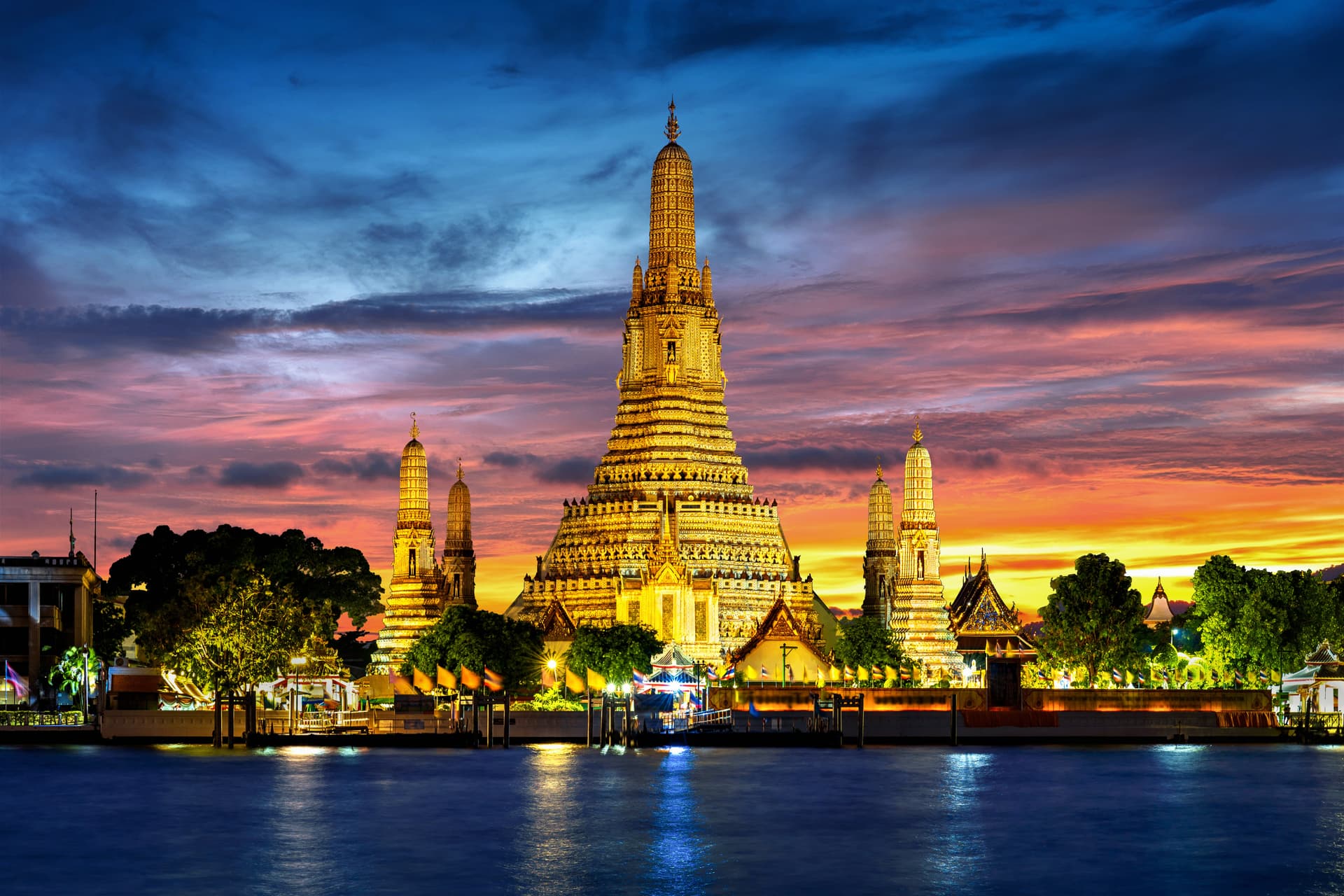
A Classic on Repeat: Thailand
Pattaya
Bangkok
Krabi
Phuket
₹1,39,978Save 11%
₹1,25,000/ person
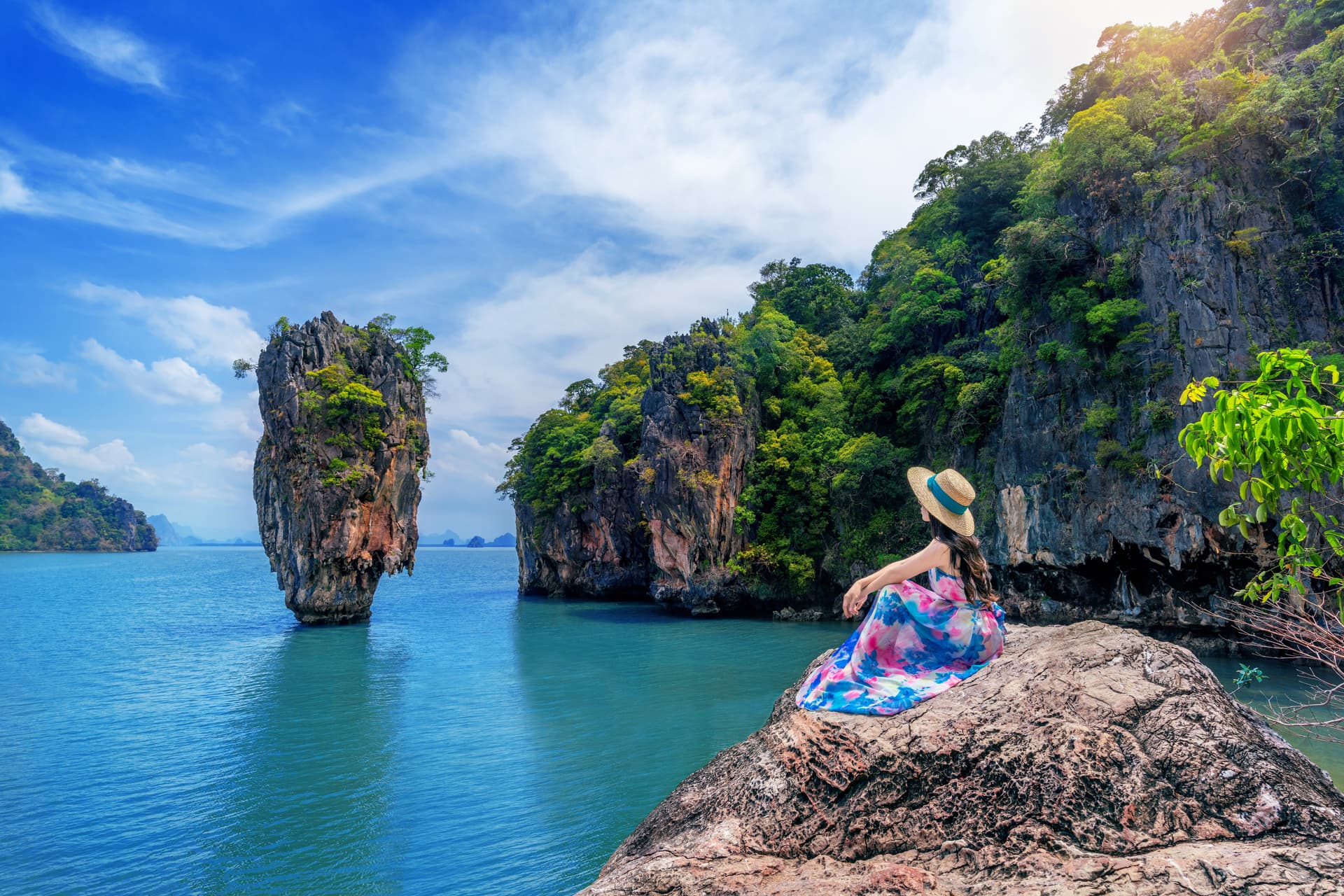
Phuket & Krabi: A Happier Shade of Blue
Krabi
Phuket
₹95,963Save 15%
₹82,000/ person

Spirit of Muhibbah: Malaysia
Kuala Lumpur
₹59,978Save 8%
₹55,000/ person
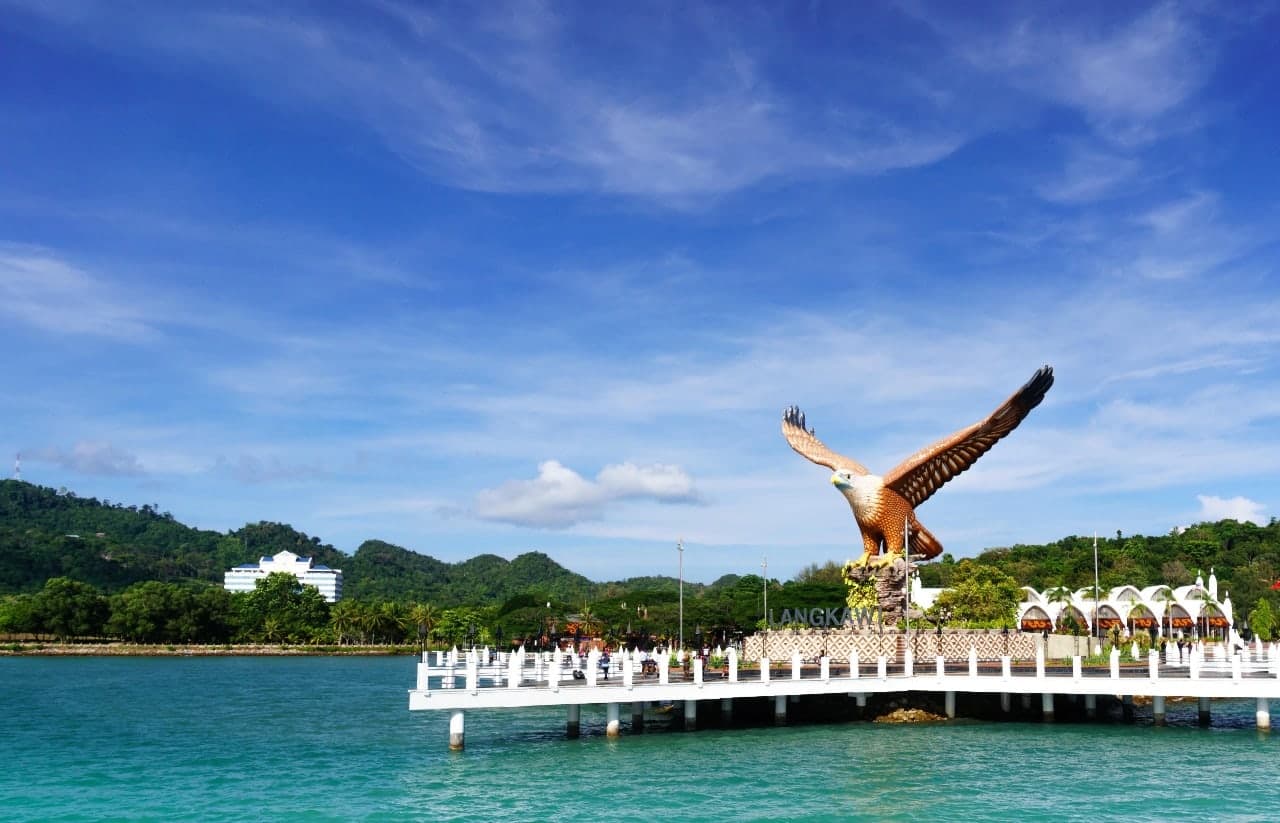
Kisah: KL Skylines, Langkawi Shores
Kuala Lumpur
Langkawi
₹97,996Save 10%
₹88,000/ person
The Little Red Dot: Singapore Beyond Scale
Singapore (City)
₹96,045Save 11%
₹85,000/ person